

the comeback cheat code
brands that made a comeback all have one thing in common...

There are very few lessons that you learn in school that you keep with you. Back when I was a senior in college, one particular lesson I’ll never forget was from my “Curiosity for Strategists” class. The assignment was easy: write a eulogy for a brand. It could be a brand that was thriving or one that had already died. And, yes, we then delivered them at a graveyard on campus.

The whole exercise beyond the chuckle forced us to reflect, identify a turning point, and learn how to tell the story with equal parts celebration and warning. It’s funny because almost every eulogy carries a tone of “what we saw coming that the poor fellow never did”. They also reemphasize our lack of being able to relish in the good times, say I love you and celebrate.
I’ve always been a sucker for the hero’s journey and take great inspiration from brands that died and came back. To reinvent yourself into the zeitgeist is the ultimate claim to fame and marketing at its purest. And often times, it’s just replaying the same tricks that you only discover when you back.
I took a look at the resurgence of Vanity Fair, Lego, New Balance and GAP.
Each story consisted of the same formula across decades:
stagnant legacy brand × (culturally tensions + borrowed brand equity) = renewed relevance
And, it usually takes one trailblazer to blow shit up.
Let’s start with Vanity Fair.
The history of print publications is one that every social marketer should read. It’s frighteningly parallel to the evolution of brand social, but I digress.
Tina Brown was hired as a last ditch effort for the magazine to make Vanity Fair increase in circulation (a la 1980’s “go viral”).
“The magazine was tens of millions of dollars in the red, with a circulation of about two hundred and fifty thousand. By the time she left, it had more than doubled its pages of advertising and gained about a million readers.”
- Nathan Heller, The New Yorker
She brought in bold writers and provocative journalism, blending celebrity culture with serious reporting. What is now cannon was unheard of in the 80’s. Raw celebrity moments were siloed from magazine journalism.
Enter: the kiss that saved the brand. It was Ronald and Nancy Reagan’s. Presidential profiles were rigid theater, but Brown saw the tension brewing. The country was drowning in political performance while becoming obsessed with peeking into the private lives of power. No one had the nerve to exploit that crack, but she did. Perhaps her lived experience of the tabloid culture around the monarchy in the UK led her to see this opportunity. At the time, The Reagans were the ultimate symbolic couple. Their image was currency and Brown spent it to buy back the nation’s attention.
The spread hit such a nerve that Nancy Reagan demanded an advance copy and restricted the image to the inside pages. Her instinct to contain it only confirmed its power.
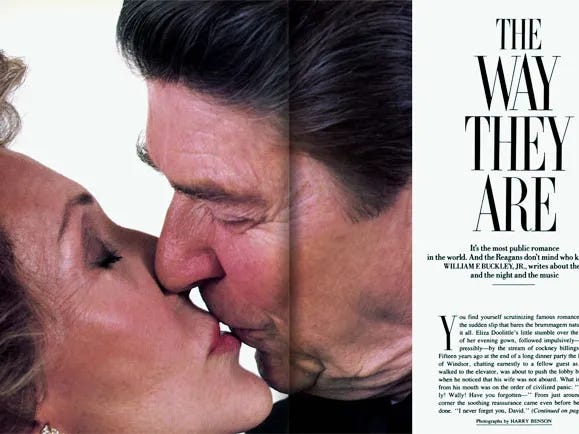
The formula:
Vanity Fair (stagnant) × [america’s craving for authenticity + reagan-brand emotional equity] = renewed relevance
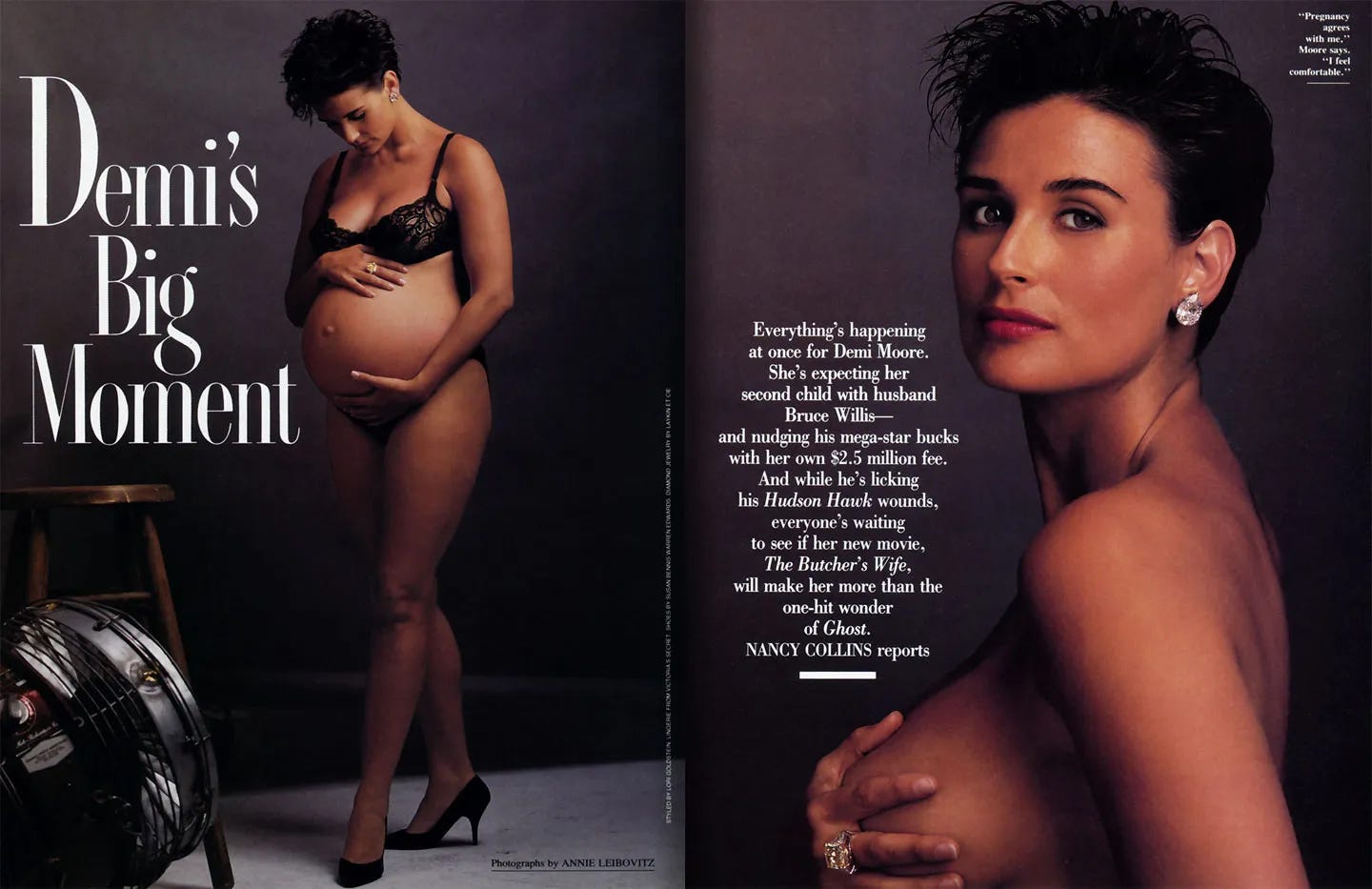
Tina Brown did it again in 1991 with Demi Moore’s pregnancy cover.
And LEGO did it too.
Founded in 1932, LEGO never posted until 1998. But as it goes, with overexpansion into new verticals, LEGO had aged into irrelevance. The company wasn’t suffering from lack of awareness, but instead was suffering from identity drift. By 2003, sales were down 30% year-on-year with an operating loss of $228m and they had accumulated $800m in debt. “Beloved but Ignored” is the worst kind of stagnation because affection blinds leadership to decay.
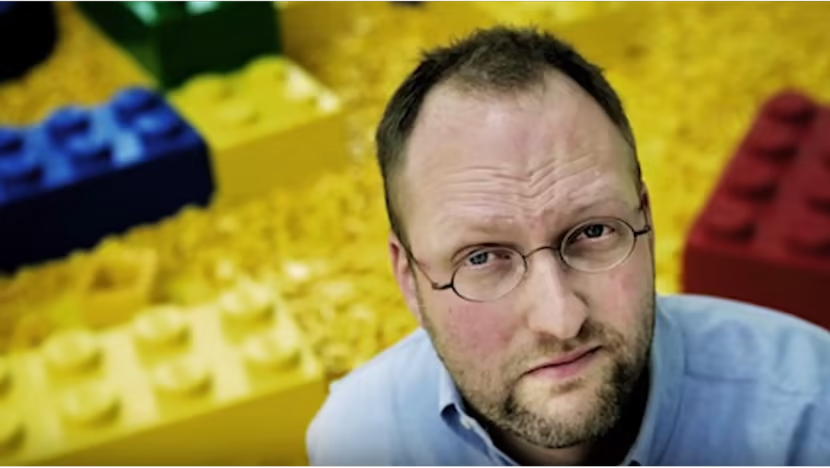
Enter: Jørgen Vig Knudstorp. Never been a CEO before and injected a new life into the brand. By 2005, they were turning a profit.
Beyond making supply chain fixes, what launched LEGO into the cultural zeitgeist was collaborative innovation with top IP: Marvel, Star Wars, Harry Potter, Minecraft, Disney.
Instead of competing with digital culture, LEGO embraced it. Again, while these partnerships seem like a no-brainer today in 2025, they were unheard of 20 years ago. Investing in the right borrowed equity at the right time prevented bankruptcy.
The formula:
LEGO (stagnant) × [kids defecting to digital worlds + the cultural power of global IP] = renewed relevance
Then there was New Balance.
The resurgence of New Balance is perhaps the one I find the most astonishing to date. I remember there being a time where if you wore New Balances you were immediately seen as someone who didn’t understand fashion. Once a dad shoe, always a dad shoe. And while it may seem a TikTok trend just happened to make them relevant again, it was all so very calculated.
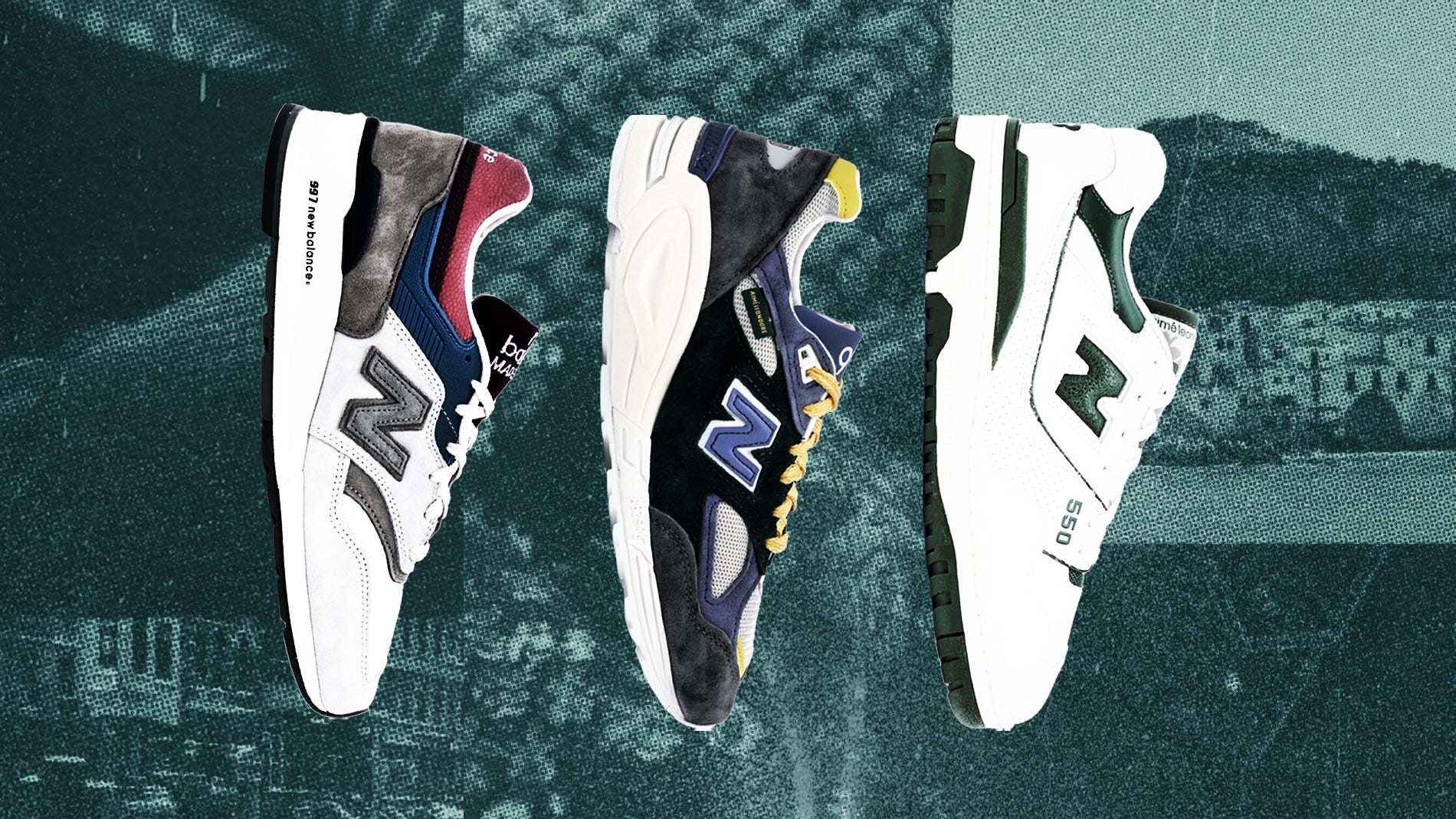
Insert their 2019 partnership with up and coming brand, Aimé Leon Dore. When Teddy Santis and Aimé Leon Dore started the collab in 2019, they tied New Balance’s heritage silhouettes to a cool NYC streetwear narrative that feels authentic to Gen-Z and young fashion fans rather than corporate marketing fluff. That repositioning made New Balance desirable again in fashion circles and made people who cared about style want them.
Simply put, Aimé Leon Dore laundered New Balance’s unfashionable past into cultural legitimacy.
The formula:
New Balance (stagnant) × [dad shoe stigma and fashion credibility + borrowed brand equity from Aimé Leon Dore’s taste-making authority) = renewed relevance
And most recently, GAP.
To set the record straight, I’ve always been a GAP girl. Born in 1998, all my early childhood clothes were littered with GAP logo. But it seemed that somewhere in 2010, GAP lost the plot.
What’s interesting, is that GAP understood the formula that they needed to act on in order to bring back relevance. But they had the most consistent flop era despite using the formula…until they cracked it in 2025.
Frankly, Gap’s attempts at borrowed brand equity were incoherent. Celebrity campaigns without cultural authority because the celebrities gap worked with around that time were famous but not culturally directive. They were borrowing the wrong equity reactively rather than proactively seeking it, as seen through their collab with Anna Kendrick.
And to add on, they tried a logo revival without a point of view. No credible tastemaker was willing to stake their reputation on GAP the way Aimé Leon Dore did for New Balance. When no one culturally sharp wants to touch you, you’re already irrelevant.
Until, Zac Posen - GAP’s new creative director - appointed in Feb 2024.
Zac was a legitimate fashion prodigy. Central saint martins trained, Anna Wintour backed him early, major runway buzz in the early 2000s. His brand stood for sculptural femininity, couture technique, red-carpet drama. However, his independent label was financially unsustainable. beautiful clothes, weak business so by 2018, Zach Posen the designer still had taste capital, but Zach Posen the company was dead.
A perfect poach.
Posen understood the rising importance of social-first as well as the conversations that led virality and brand authority.
Generation wars and identity politics were his secret weapons and he knew how to bring them full circle.
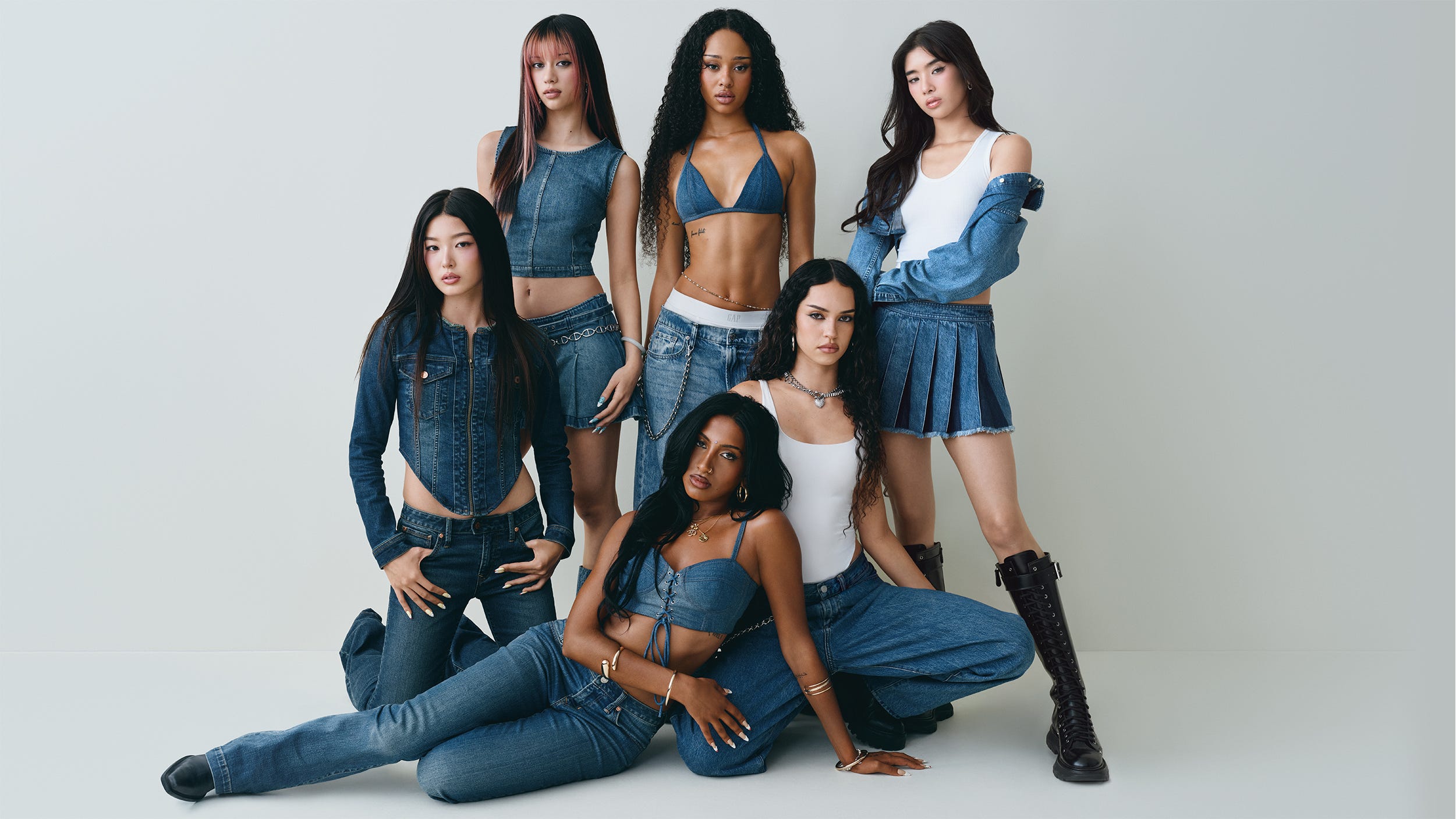
GAP’s brand equity was frozen in a 90s mall-memory loop but Katseye as a group sits in a charged zone. Hyper-curated, globalized, algorithm-native pop femininity that are extremely online. Extremely aesthetic, yet a feeling of emotional engineering. And, well, GAP historically stood for the opposite emotional register. Essentially, normcore before normcore.
The smartest move wasn’t just the casting, but it was the decision to make them dance to Milkshake instead of Katseye’s own music. That choice turned a simple fashion spot into a generational pressure point. Milkshake carries pre-social media pop femininity and activates millennial muscle memory that maps directly onto GAP’s past cultural peak.
It let non-fans re-enter without having to learn a new group or decode new aesthetics and at the same time, it pushed on a hyper-optimized, algorithm-native pop girl group relevant to those who have no recollection of 90’s GAP.
Rather than pitting generations against eachother, nostalgia worked here to create a contested yet universal meaning. Who does this belong to? Whose era is this? Who gets to perform it?
The ultimate cross-generational, “yes, and…”.
The formula:
GAP (stagnant) × [pre-social media nostalgia vs algorithm-native stardom + borrowed brand equity from Katseye & Milkshake as shared cultural memory) = renewed relevance
Great read, Zaria! I really learned a lot. I always wondered about NB, Lego, etc. In regards to GAP, I would actually disagree and say the turning point started when they did their campaign with Troye Sivan. (I believe that was 2024.) The popularity of that campaign fully re-surged their dance-focused ads. They also had one with Tyla before the HUGE success they had with KATSEYE.
The "borrowed brand equity" framing is incredibly sharp. What seperates the GAP flops from the GAP success wasn't just celebrity power but cultural directiveness, like you said. Aimé Leon Dore didnt just lend coolness to New Balance, they staked reputational capital on it. When I saw the Katseye ad I couldn't place why it felt diferent from previous Gap attempts and this nails it completely.